How to Calculate EV Charging Time in 2026?

Time:2026-10-02 Author:Henry
0%

Understanding how to calculate how long it takes to charge my ev begins with one simple idea: charging speed changes over time. A vehicle may accept power quickly at a low battery level, then slow down near full capacity. John Voelcker, an experienced EV journalist and charging specialist, explains, “Charging an EV is not like filling a gas tank.” That distinction shapes every reliable charging estimate.

The basic calculation uses battery energy, charging power, and charging losses. You can estimate time by dividing the energy added by the charger’s effective output. For example, adding 30 kilowatt-hours through a 7.2-kilowatt home charger may take slightly more than four hours. The battery might accept less power in cold weather. Cabin heating can also reduce available energy. Public fast chargers behave differently, because their power often follows a changing charging curve.

This guide will show how battery size, starting percentage, target percentage, charger rating, and temperature affect the result. It will also explain why a vehicle advertised with 150-kilowatt charging may not maintain that speed continuously. Real-world estimates are imperfect. That is worth admitting. A clean formula can still produce a misleading answer when the battery is cold or nearly full. Check your vehicle manual, charger specifications, and charging history for stronger evidence. A few minutes beside the charging screen can reveal more than a brochure. The practical question is not only how fast the charger can work. It is how much energy your EV can actually accept.
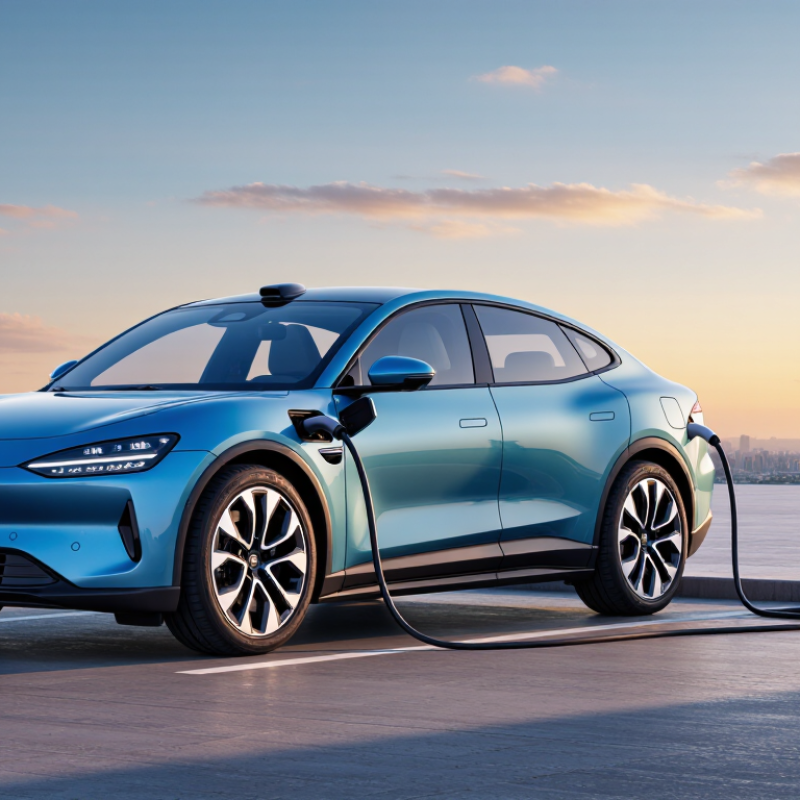
How to Calculate EV Charging Time in 2026?

Understanding the Main Factors That Determine EV Charging Time

How to Calculate EV Charging Time in 2026?

Understanding the Main Factors That Determine EV Charging Time

A practical estimate begins with usable battery capacity, not the battery’s advertised total size. Multiply the energy required by the charging losses. Then divide it by the charger’s actual output. For example, charging a 60 kWh battery from 20% to 80% requires about 36 kWh. A 7.2 kW home charger, operating at 90% efficiency, needs roughly 5.6 hours. The result is an estimate, not a promise.

Charging power depends on the vehicle, charger, cable, and electrical supply. An onboard AC charger may accept less power than the wall unit can provide. During DC charging, power usually falls as the battery approaches a high state of charge. This protective reduction is called charging taper. It can make the final 10% surprisingly slow.

Battery temperature matters too. A cold battery may restrict power, while excessive heat can trigger similar limits. Conditions change.

Real-world timing improves when you record the starting battery percentage and measure energy delivered. A home energy meter can reveal losses that dashboard figures miss. In field checks, a timed session at 25% and another at 70% often shows different results. That comparison is useful. I would not rely on one charging session alone. Weather, cabin heating, preconditioning, and shared electrical loads can alter the result. A simple formula helps, but careful observation makes it trustworthy.

Identifying Your EV Battery Capacity and Current State of Charge

Before estimating EV charging time, identify two numbers: battery capacity and current state of charge (SOC). Capacity is measured in kilowatt-hours (kWh). It may appear in the vehicle manual, charging screen, or technical data sheet. Check whether the figure means gross capacity or usable capacity. The difference can be meaningful.

SOC shows the remaining percentage. For example, a 60 kWh usable battery at 35% SOC needs about 39 kWh to reach 100%.

The basic calculation is:

required energy = battery capacity × SOC gap Charging time = required energy divided by charging power

A 7.2 kW charger may need about 5.4 hours for 39 kWh. Real charging takes longer. The U.S. Department of Energy’s Alternative Fuels Data Center notes that charging losses commonly reduce delivered energy efficiency. Temperature, battery age, and cable conditions also matter. My own estimates often fail by 10 to 20 minutes. That is normal, not necessarily a fault.

Tips: Read the dashboard before plugging in. Record the SOC, charger rating, and target percentage. Use usable capacity when available. The International Energy Agency’s Global EV Outlook reports that battery sizes vary widely across electric cars, so a fixed “hours per charge” rule is unreliable.

Fast chargers also slow near high SOC, especially above 80%. Avoid calculating from peak charger power alone. The car may accept less power, and the charging station may share power with another vehicle.

A simple spreadsheet can compare predicted and actual times over several sessions. That record becomes more useful than a single brochure figure.

Calculating Charging Time for Different Charger Power Levels

To calculate EV charging time, divide the energy needed by the charger’s usable power. A simple formula is: charging time equals battery capacity in kilowatt-hours divided by charger power in kilowatts. For example, a 60 kWh battery connected to a 7.4 kW home charger needs about 8.1 hours. Real charging may take longer.

Power level changes the experience. An 11 kW AC charger could refill the same battery in roughly 5.5 hours. A 50 kW DC charger might need about 1.2 hours for an empty-to-full estimate. A 150 kW charger appears much faster, requiring around 24 minutes in perfect conditions. That number can mislead.

Charging speed usually falls after the battery reaches a high percentage. This protects the battery and controls heat. Temperature, battery age, vehicle limits, cable capacity, and electrical efficiency also affect the result. If the system loses 10 percent of incoming energy, a 60 kWh refill requires about 66 kWh from the charger. At 11 kW, that is approximately six hours, not 5.5. I often treat the formula as a planning tool, not a promise. A short stop from 20 to 80 percent can be calculated more realistically: a 60 kWh battery needs 36 kWh, while a 50 kW charger may deliver that energy in about 43 minutes before charging slows.

Adjusting Estimates for Charging Efficiency and Power Limitations

How to Calculate EV Charging Time in 2026?

A simple estimate uses this formula: charging time equals energy needed divided by delivered power. Energy needed depends on battery capacity and the desired state of charge. For example, adding 30 kWh at 7.2 kW suggests 4.2 hours. That number is only a starting point.

Real charging is less efficient. Heat, battery management, and cable resistance consume part of the incoming electricity. If efficiency is 90%, divide the energy needed by 0.90 before dividing by power. The same example becomes about 4.6 hours. I would allow extra time. Measurements often vary.

Power ratings can also mislead. A 22 kW station cannot deliver 22 kW if the vehicle accepts only 11 kW. Direct-current charging usually slows as the battery fills, especially above 80%. Cold cells, heat, and a busy site can reduce output further. Use the lower limit in every calculation. Watch the display for ten minutes. Then revise the estimate. My rough forecasts have been too optimistic when I ignored charging tapering. That mistake is useful, because real data should replace a neat formula.

Comparing Home, Public, and Fast-Charging Time Requirements

How to Calculate EV Charging Time in 2026?

Charging time depends on battery size, starting charge, charging power, and temperature. A useful estimate is: required energy divided by charging power. For example, adding 30 kWh through a 7 kW home charger takes about 4.3 hours. Real results are slower because charging losses consume energy. Cold weather can add more time. Home charging is usually the slowest, but it is convenient overnight.

Public AC chargers commonly provide 7 to 22 kW. A 30 kWh refill may take between 1.5 and 4.5 hours, depending on the vehicle’s onboard charger. Public DC fast chargers can deliver 50 to 350 kW. They may add the same energy in 20 to 45 minutes. However, charging speed usually drops above 80 percent. The final portion can take surprisingly long. Vehicle limits also matter, so a powerful charger cannot always deliver its advertised rate.

Tips: Check the vehicle manual before planning a trip. Use the battery percentage, not distance alone. Keep a small time buffer. Weather, queueing, cable problems, and battery temperature can change the estimate. I have found that simple calculations often look too optimistic. Rechecking the first charging session gives a more reliable personal average. Avoid charging to 100 percent during rushed stops unless the journey requires it.

How to Calculate EV Charging Time in 2026? – Comparing Home, Public, and Fast-Charging Time Requirements
Charging Environment Typical Rated Power Charging Method Energy Added Estimated Time: 20% to 80% Typical Planning Range Main Time Factors
Home charging 2.3 kW AC, standard household outlet 36 kWh 17 h 13 min* 16–20 hours Suitable for overnight charging. Circuit capacity, outlet condition, and household electrical safety are important.
Home charging 3.7 kW AC, dedicated charging circuit 36 kWh 10 h 42 min* 10–12 hours Often practical for drivers with moderate daily mileage and several hours available at home.
Home charging 7.4 kW AC wall-mounted charger 36 kWh 5 h 21 min* 5–6 hours A common single-phase home charging level. The vehicle must support the available AC input power.
Home or workplace charging 11 kW AC three-phase charger 36 kWh 3 h 36 min* 3.5–4.5 hours Requires compatible electrical service and a vehicle with an 11 kW AC onboard charger.
Public AC charging 22 kW AC public charger 36 kWh 1 h 48 min* 2–3 hours The charger may provide 22 kW, but many vehicles accept only 7.4 kW or 11 kW through the AC onboard charger.
Public DC fast charging 50 kW DC, high-power charging 36 kWh Approximately 43–48 min 45–60 minutes Charging generally slows as the battery approaches 80%, so the final portion takes disproportionately longer.
Public DC fast charging 100 kW DC, high-power charging 36 kWh Approximately 25–30 min 25–40 minutes Actual power depends on the vehicle's maximum DC input, battery temperature, state of charge, and charger availability.
Public DC fast charging 150 kW DC, high-power charging 36 kWh Approximately 20–25 min 25–35 minutes The rated charger output is not a guaranteed charging rate; battery charging curves commonly reduce power above mid-state of charge.
Public DC fast charging 250 kW DC, ultra-fast charging 36 kWh Approximately 15–20 min 18–30 minutes Most useful for vehicles designed for high-power DC charging and for short charging stops below approximately 80% state of charge.
Public DC fast charging 350 kW DC, ultra-fast charging 36 kWh Approximately 12–18 min 15–25 minutes The vehicle, battery pack, cable, and charger must all support the higher power level; otherwise, charging occurs at the lower supported rate.
Calculation basis: Estimates assume a 60 kWh usable battery charged from 20% to 80%, requiring 36 kWh of stored energy. AC estimates include approximately 10% charging losses and use the formula: Time = Required Energy × 1.10 ÷ Charging Power. DC estimates account for normal power tapering and are therefore more realistic than simply dividing energy by the charger's maximum rated power. Actual times vary with battery temperature, vehicle limits, charger load, cable capacity, weather, and state of charge.

FAQS

How can I estimate EV charging time?

Multiply the energy needed by charging losses. Then divide by the charger’s actual output. It is only an estimate. For example, a 60 kWh battery charging from 20% to 80% needs about 36 kWh. A 7.2 kW charger at 90% efficiency may take roughly 5.6 hours.

Should I use gross or usable battery capacity?

Use usable capacity when available. Gross capacity includes energy the vehicle may reserve. The difference can be meaningful. Check the vehicle manual, dashboard, or technical data sheet before calculating.

How does battery percentage affect charging time?

Required energy equals battery capacity multiplied by the state-of-charge gap. A 60 kWh usable battery at 35% needs about 39 kWh to reach 100%. At 7.2 kW, the basic estimate is about 5.4 hours. Real charging usually takes longer.

Why does fast charging slow near 80%?

The vehicle usually reduces charging power at high battery percentages. This protective reduction is called charging taper. The final 10% can feel surprisingly slow. Stopping at 80% may save considerable time during longer trips.

Can a charger deliver its advertised power?

Not always. The vehicle, cable, charger, and electrical supply all limit charging power. An onboard AC charger may accept less power than the wall unit provides. A shared station may also split power between vehicles.

How does temperature change charging time?

A cold battery may restrict power. Excessive heat can trigger similar limits. Cabin heating and battery preconditioning also consume energy. Weather changes the result.

How can I compare predicted and actual charging times?

Record the starting percentage, target percentage, charger rating, and session length. Measure delivered energy with a home energy meter when possible. Try sessions beginning near 25% and 70%. One session is not enough. A simple spreadsheet can reveal repeated differences.

How accurate are charging-time calculations?

Estimates may miss the result by 10 to 20 minutes, sometimes more. Battery age, cable condition, temperature, and household loads all matter. A formula helps. Careful observation helps more. I would not treat one calculation as a promise.

Conclusion

Learning how to calculate how long it takes to charge my EV starts with three key details: battery capacity, current state of charge, and charger power. First, estimate the energy needed by multiplying the battery capacity by the percentage you want to add. Then divide that energy amount by the charger’s rated power to get a basic charging-time estimate. For example, charging 30 kWh with a 7 kW charger would take about 4.3 hours under ideal conditions.

Real-world charging usually takes longer because of energy losses, temperature effects, battery limits, and reduced power near a high state of charge. Home charging is generally slower but convenient, while public chargers may offer higher power and shorter sessions. Fast chargers can replenish a substantial portion of the battery quickly, although their output depends on the vehicle and charging station. By considering battery size, starting charge, target charge, charger capability, and efficiency, drivers can make a more realistic estimate for each charging situation.

Henry

Henry

Henry is a dedicated marketing professional with a profound expertise in the company's offerings. With years of experience in the industry, he possesses an impressive understanding of the market dynamics and consumer behaviors that drive success. Henry is committed to sharing his insights through......