As electric vehicles (EVs) become mainstream, understanding the charging infrastructure is crucial. Specifically, many users ponder: "why do public DC chargers have shorter cables than home ones?" Data from the International Energy Agency (IEA) highlights that convenience and user experience drive the design of charging stations. Public DC chargers prioritize accessibility and efficiency, often situated in busy areas where space is limited.
Industry expert Dr. Emily Tran notes, “Shorter cables reduce trip hazards and enhance the quick turnover of vehicles.” This perspective reflects the tension between safety and practicality in public charging environments. With home chargers, longer cables accommodate varying parking situations and provide flexibility. However, the complexity of public spaces necessitates a streamlined approach.
Public charging stations are primarily designed for quick, efficient use, where users spend minimal time. While longer cables may offer more convenience, they could obstruct walkways. Balancing these needs proves challenging. Despite advancements, the question of cable length continues to evoke debate, underscoring the evolving nature of EV charging infrastructure.
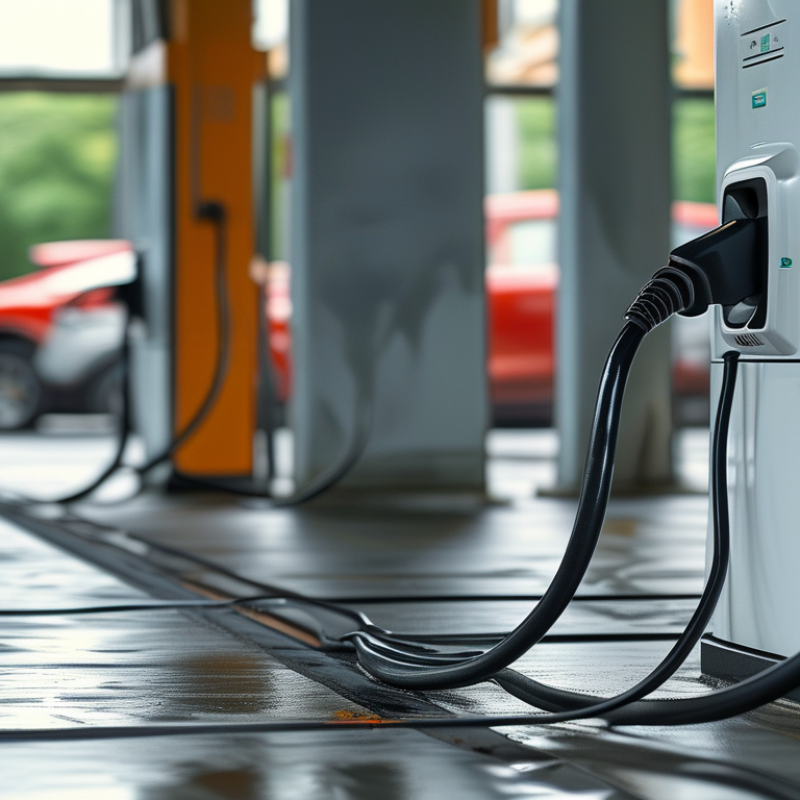
When comparing public DC chargers to home chargers, design differences become evident. Public chargers often feature shorter cables. This design choice stems from the need for convenience in crowded spaces. Longer cables can become tangled and may pose safety hazards. By keeping cables shorter, public chargers reduce the risks of accidents while maximizing space for multiple users.
Home chargers prioritize user experience. Longer cables accommodate various parking positions. They allow for easy access to outlet connections. Home installations often consider the layout of the garage or driveway. However, an overly long cable can create storage issues and may not always be ideal. Balancing functionality with usability becomes a challenge for homeowners.
Ultimately, the design of charging stations reflects their intended environment. Public chargers prioritize speed and safety. In contrast, home chargers focus on user convenience. Understanding these design choices can help users make informed decisions about their charging needs. There’s always room for improvement in both types of chargers. Each solution should aim to enhance the charging experience while addressing potential safety concerns.
: Public chargers usually have shorter cables for safety and convenience in crowded areas.
Short cables reduce the risk of accidents and clutter in busy environments.
Home chargers typically have longer cables for user convenience and flexibility.
Long cables can create storage problems and may not always be practical for homeowners.
They feature designs that focus on quick stop-and-go charging with shorter cables.
Yes, longer cables can pose tripping hazards and may get damaged by moving vehicles.
Homeowners prefer longer cables to accommodate different parking positions and angles.
Ensuring accessibility for larger vehicles while balancing safety and efficiency remains an issue.
Yes, there’s always room for improvement in enhancing safety and user experience.
Varied vehicle sizes in public spaces necessitate reducing cable length to prevent damage.
The article "Why Do Public DC Chargers Have Shorter Cables Than Home Chargers?" explores the design differences between public and home electric vehicle (EV) chargers, focusing on the implications of cable length. One key reason why public DC chargers have shorter cables than home ones relates to charging efficiency and user experience. Shorter cables can minimize clutter and streamline the charging process in public spaces, where quick turnover is essential.
Additionally, safety considerations play a crucial role in the design of public charging stations, as shorter cables reduce the risk of tripping hazards in high-traffic areas. Accessibility for all users is also vital; shorter cables can cater to various vehicle sizes and charging configurations. The article concludes by examining user behavior and preferences, highlighting how individuals may lean toward longer cables at home for convenience while accepting shorter options in public charging scenarios.

 Midwest Charger