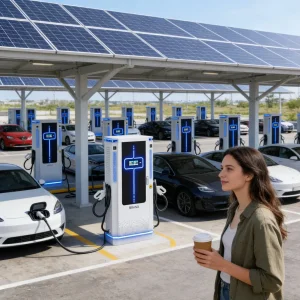
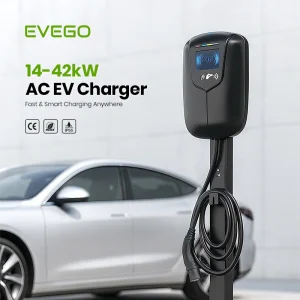
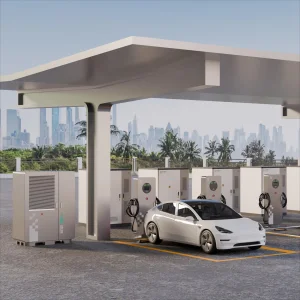
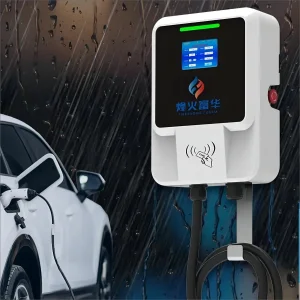
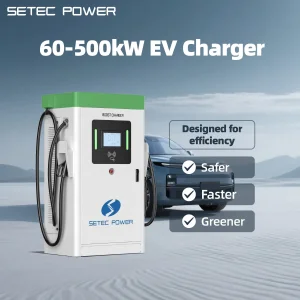
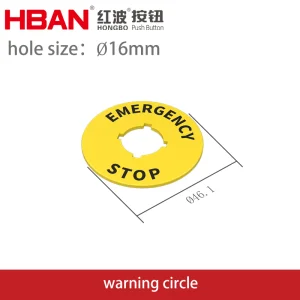
Industrial-grade vehicle charging equipment, modules, and perimeter accessories engineered to comply with strict global safety benchmarks.
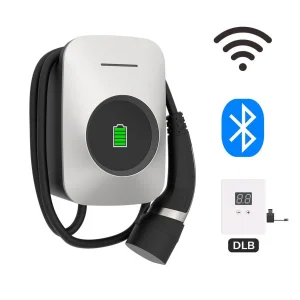
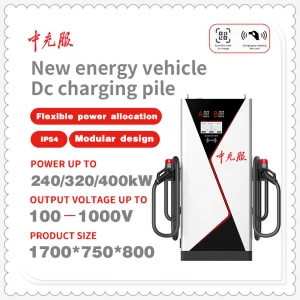
Zhejiang Midwest Charger Co., Ltd. is a leading high-tech enterprise based in China, specializing in the research, development, production, and sales of electric vehicle (EV) charging equipment. Our diverse product portfolio includes home AC charging stations, portable AC chargers, and high-performance DC fast charging stations suitable for residential, commercial, and public applications.
With a strong commitment to innovation and excellence, we aim to provide safe, reliable, and efficient EV charging solutions to meet the evolving needs of global customers. Through our technical superiority and advanced assembly processes, we ensure that every client—ranging from commercial municipal operators to residential project installers—receives class-leading charging infrastructure designed for long-term operational viability.
Our collaborative ethos shapes our engineering targets. By bridging Chinese supply chain efficiencies with global electrical standards, we manufacture robust charging piles capable of operating in extreme environments. Our global reach expands annually, driven by consistent certification compliance and customizable OEM/ODM product designs.
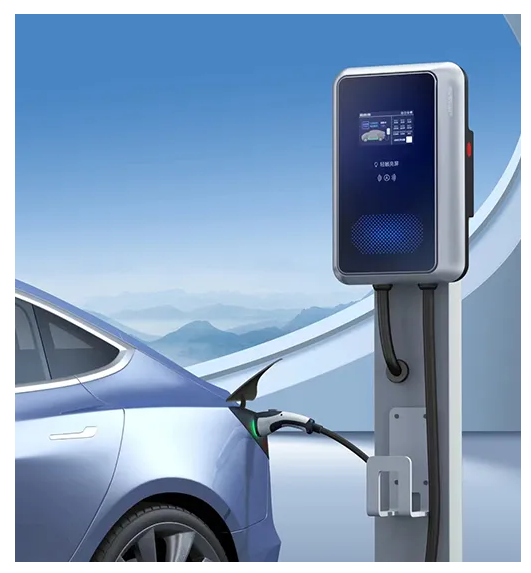
Empowering the world's transition to sustainable energy with robust EV infrastructure built on reliability and global scalability.
Our corporate vision is to make EV charging safer, smarter, and more accessible. We strive to be a first-class enterprise and build an internationally recognized brand. By continuously advancing technology and adhering to strict quality standards, we aim to lead the EV charging industry toward a more sustainable and electrified future.
Our location in Zhejiang, China’s primary industrial manufacturing hub, grants us unparalleled access to an end-to-end electrical components supply chain. By maintaining localized supplier ecosystems for key raw materials (such as flame-retardant PC/ABS housings, highly conductive copper terminals, and high-spec semiconductor chipsets), we significantly reduce lead times and logistics costs.
This localized cluster allows us to maintain direct supervision over quality and manufacturing processes. It ensures our international procurement partners receive highly competitive pricing without sacrificing the material integrity required to pass UL, CE, CQC, and FCC certifications.
Through our dedicated efforts, Zhejiang Midwest Charger Co., Ltd. has successfully exported products to over 20 countries, including the United States, the United Kingdom, Germany, France, and more. Our products comply with CE, CQC, and other international and domestic quality certifications, and we hold multiple invention patents for our proprietary technologies.
"To penetrate highly regulated markets like North America, complying with the National Electrical Code (NEC) and attaining UL Listing is not just an advantage—it is a critical requirement. Our engineering and compliance departments work hand-in-hand with Underwriters Laboratories to ensure our fast chargers satisfy every safety metric."
Why Underwriters Laboratories (UL) certification is essential for modern electric vehicle supply equipment installations.
Electric Vehicle Supply Equipment (EVSE) acts as a high-power bridge between the electrical grid and a vehicle's sensitive lithium-ion battery array. Operating at high voltages (ranging from 240V AC for Level 2 up to 1000V DC for ultra-fast commercial systems), these systems present potential hazards if not properly isolated, monitored, and constructed. UL listing guarantees that the equipment has undergone exhaustive testing for thermal safety, mechanical durability, and electrical protection.
These standards cover AC EV charging stations (up to 240V) and DC Fast Charging systems (up to 1000V). They govern construction, grid connection, and thermal performance thresholds.
UL 2231-1 and UL 2231-2 regulate Personnel Protection Systems. These standards require integrated Charge Circuit Interrupting Devices (CCID) to detect leakage current and shut down power to prevent shocks.
Charging stations must endure harsh outdoor conditions. UL certification verifies weatherproofing compliance (NEMA 3R/4/4X ratings) for protection against rain, snow, and windblown dust.
| Compliance Metric | UL 2594 Standards (AC) | UL 2202 Standards (DC) | Operational Safety Value |
|---|---|---|---|
| Overcurrent Protection | Integrated circuit breaker requirements | Dual safety contactors and fast-acting fuses | Prevents thermal runaway and damage to grid infrastructure |
| Leakage Current (CCID) | CCID20 (20mA threshold) | CCID5 / CCID20 with self-test mechanisms | Ensures absolute user safety from electrical shocks |
| Thermal Overload | Under 90°C surface limit at full load | Active cooling loop monitoring | Prevents fire hazards during continuous operation |
| Grid Harmonics | IEEE 519 compliance checks | Power factor correction > 0.99 | Minimizes distortion on localized municipal power lines |
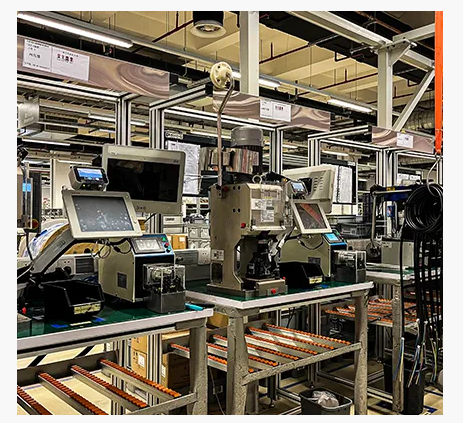
Our company operates an 8,000-square-meter modern factory with around 200 skilled employees. With over 12 years of manufacturing experience, we support both ODM and OEM services, enabling customized solutions for diverse market needs. Our R&D team focuses on innovative design, energy efficiency, and intelligent charging management to ensure each product meets the highest standards of performance and safety.
This deep R&D focus allows us to implement next-generation technical architectures:
Our structured inspection processes ensure that every charging station operates safely and reliably under continuous loads.
Quality and safety are the cornerstones of our product philosophy. Each product undergoes rigorous testing and verification before entering the market. We carefully select suppliers for every component and perform regular inspections on all marketed products. Our commitment extends to comprehensive after-sales service, where our professional team follows up on all customer concerns until fully resolved.
To implement this philosophy, our quality control procedures include:
Every component—from power relays and contactors to control units and communication cards—undergoes testing to confirm compliance with international certification requirements.
We test our units in specialized chambers at extreme temperatures (from -40°C to +75°C) to ensure their reliability in harsh climates, from sub-zero winters to desert heat waves.
All finished charging stations run at 100% load during burn-in testing. This helps isolate and address potential component issues before packaging and shipping.
Providing technical compliance and specialized support for diverse commercial, industrial, and residential environments.
Deploying charging stations globally requires local support networks. We partner with certified installers and local service providers in North America and Western Europe to help clients navigate regional codes, manage grid interconnect requests, and provide rapid maintenance.
We supply partners with complete wiring schematics, spare parts packages, and remote diagnosis capabilities. Our direct firmware update system allows operators to resolve software issues and update OCPP parameters without sending a technician to the site.
Our UL Listed and CE certified charging systems serve three main application areas:
Answers to technical and regulatory questions about certified EV charging systems.
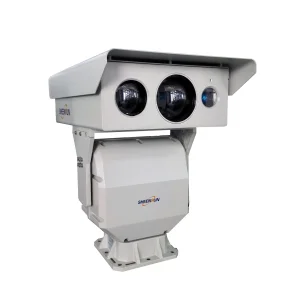
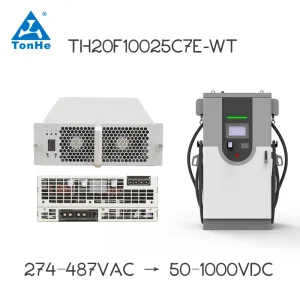
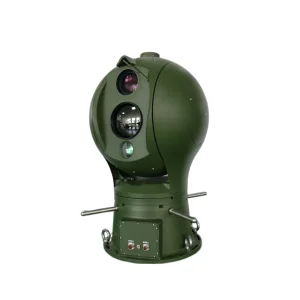
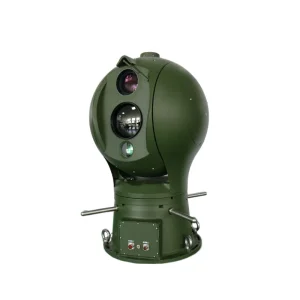
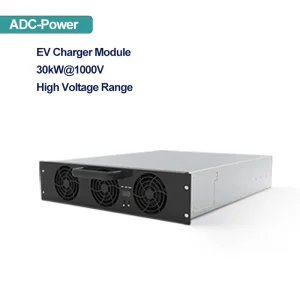
High-performance optical sensors, fast charger rectifiers, durable enclosures, and components built for modern power grids.
 Midwest Charger